Are you looking for a nutrient-dense, high-fiber ingredient to improve cattle performance while simplifying your feed formulation and processing steps? Alfalfa (Medicago sativa) is widely recognized by nutritionists and feed millers as a superior forage crop for cattle, and it translates especially well into pellet form.
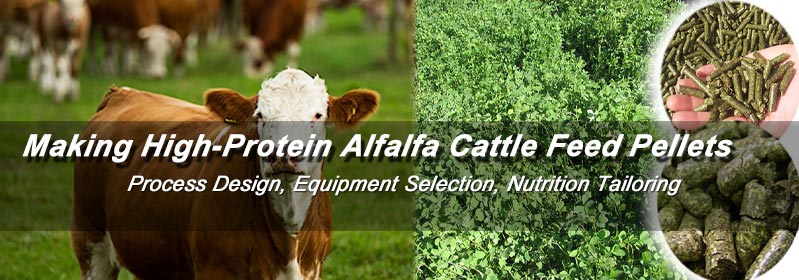
Making High-protein alfalfa feed pellets for cattle
This article explains why alfalfa pellets work, how to design practical alfalfa-based cattle formulas, and what plant and processing considerations matter when producing alfalfa pellets at commercial or small-farm scale factory. With over 20 years of experience in feed pellet equipment manufacturing, ABC Machinery's guidance blends practical formulation tips with pelletizing and plant layout insights drawn from our industry expertise! Welecome to contact us! (Related Posts: Forage Grass Pellet Making for Livestock)

Why choose alfalfa? what does it bring to a cattle feed pellet? (Is alfalfa really worth pelleting?)
Nutritional strengths of alfalfa
-
High crude protein for a forage: typically 15–20% (depending on cutting and maturity), making alfalfa an excellent protein contributor to dry cow, growing-heifer and lactating rations.
-
Good digestible fiber and effective NDF: supports rumen function and stimulates cud-chewing.
-
Contains useful minerals (Ca, K) and some vitamins: helping balance mineral mixes when used with grain concentrates.
Practical advantages of pelleting alfalfa
-
Improved handling, storage and transport compared with loose hay or baled forage.
-
Uniform particle size reduces sorting by cattle and improves intake consistency.
-
Pellets enable precise inclusion rates in compound feeds and TMR (total mixed rations), and make blending with grains and by-products straightforward.
Potential Pitfalls in Alfalfa Processing
Alfalfa is relatively high in moisture when freshly cut and can be abrasive to dies if not properly dried and processed. Proper drying, grinding and conditioning steps are essential to good pellet quality.
How to formulate alfalfa-based cattle pellets? (What ratios and ingredients make the best cattle feed?)
Define the production target (calf, growing, lactating, or finishing)
-
Calves and growing animals: higher protein and highly digestible energy.
-
Lactating dairy: energy density plus effective fiber to maintain milk fat and rumen health.
-
Finishing beef: focus on energy (grains) with alfalfa supplying protein and effective fiber.
Typical ingredients and complementary raw materials
-
Alfalfa: protein, fiber, minerals.
-
Corn/maize or barley: primary energy source. (See how maize is used as a grain base in cattle pellets.)
-
Soybean meal / cottonseed meal: protein concentration and amino-acid balance.
-
By-products (DDGS, beet pulp, citrus pulp): energy and palatability adjustments.
-
Mineral/vitamin premix: meet macro/micro mineral requirements.
-
Fat/oil: increase energy density in cold climates or for high-yielding cows.
Example alfalfa-based pellet formulas
Below is a simple sample table for reference — adjust final ratios based on local lab analyses, cattle class and production goals.
|
Production target |
Alfalfa (%) |
Corn/Maize (%) |
Soybean meal / Cottonseed meal (%) |
By-products (%) |
Mineral premix (%) |
|---|---|---|---|---|---|
|
Calf starter (weaning → growing) |
30 |
40 |
20 |
5 (DDGS) |
5 |
|
Growing/Backgrounding |
35 |
45 |
10 |
5 (beet pulp) |
5 |
|
Lactating dairy (TMR pellet) |
25 |
35 |
15 |
15 (corn silage inclusion via mixing) |
10 |
|
Finishing beef |
20 |
60 |
10 |
5 (wheat bran) |
5 |
Are you ready to draft a trial formula for your cattle or cow and a simple plant layout? ABC Machinery can provide a sample feeding trial protocol and cattle feed production line layout plan tailored to your throughput and raw material availability.

Small tips for formula adjustment
-
Increase alfalfa when forage-derived effective fiber is needed (e.g., to prevent rumen acidosis).
-
Reduce alfalfa and increase grain/fat to raise energy density for high-producing cows or finishing cattle.
-
Use feed formulation software or consult a nutritionist to ensure amino-acid and mineral balance; make seasonal adjustments (winter energy bump).
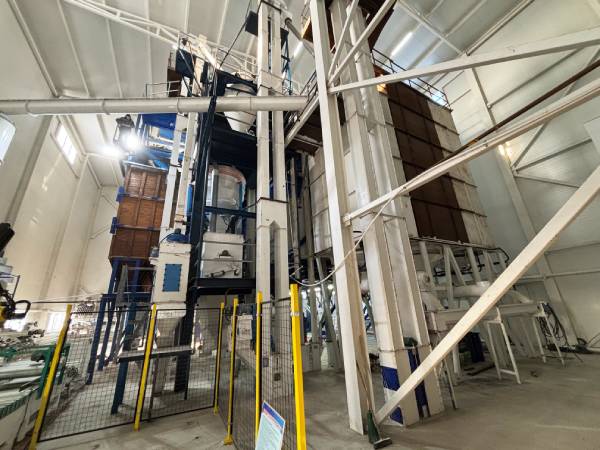
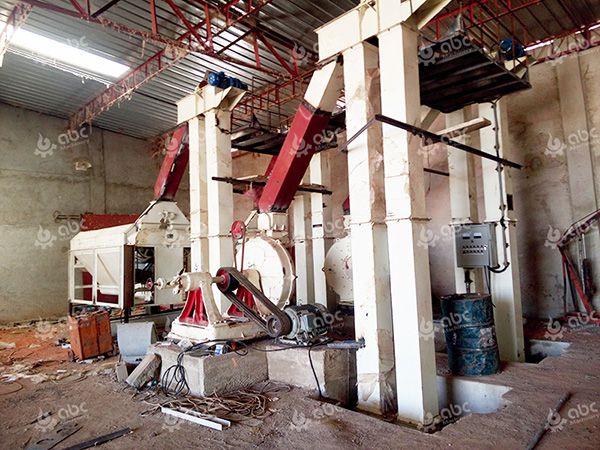
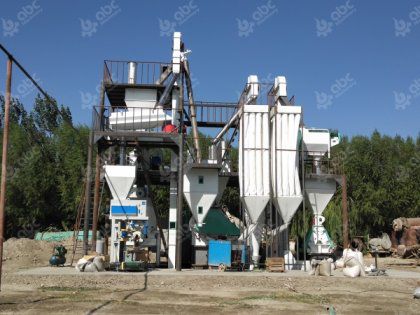
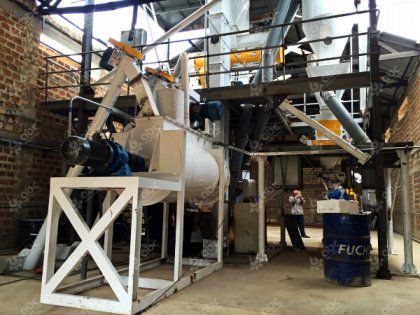
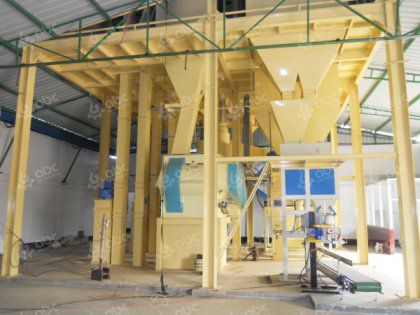
[Alfalfa Pellet Manufacturing Process] Which Machines and Layout do you Need?
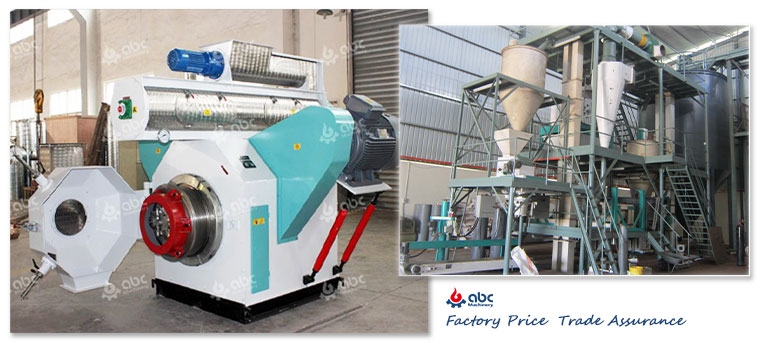
Top-Selling Ring Die Mill for Alfalfa Cattle Feed
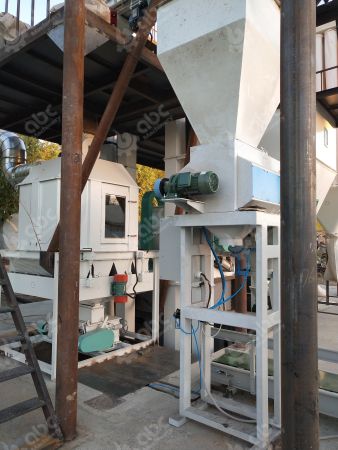
Alfalfa Cattle Feed Pellet Cooler
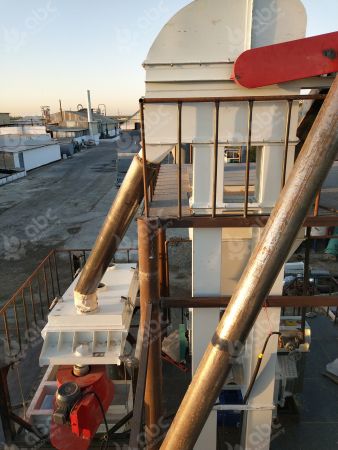
Alfalfa Feed Pellet Rotary Screener
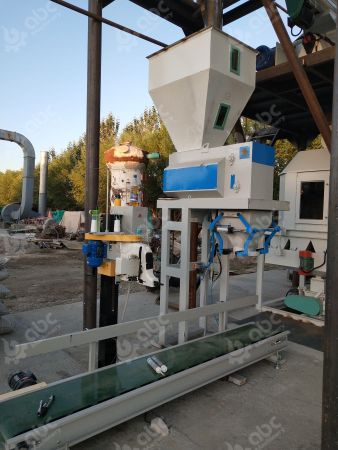
Alfalfa Cattle Feed Pellet Packaging Machine
-
Harvest & drying: bring moisture down to target 10–12% for safe storage and efficient pelleting.
-
Grinding / hammer milling: reduce particle size to the die-recommended range (usually 2–5 mm) to improve pellet integrity. A robust hammer mill is crucial for high-fiber forage like alfalfa.
-
Mixing: blend alfalfa with grains, meals, premixes and any liquid binders or fats for uniformity.
-
Conditioning: add steam or moisture to activate binders, gelatinize starch and improve pellet formation.
-
Pelletizing (pellet mill): ring die or flat die pellet mills suitable for alfalfa. Select a mill rated for forage pelleting; consult manufacturer specs for die clearance and power. (Here are 5 Steps to Start a Cattle Feed Pellet Manufacturing Process & Technologies>>>)
-
Cooling & screening: cool pellets to ambient temperature and remove fines.
-
Packing & storage: bagging or bulk storage; control moisture for shelf stability.
Troubleshooting common processing issues
-
Low pellet hardness: check moisture, conditioning time and die compression ratio.
-
Die abrasion / short die life: ensure alfalfa is free of contaminants (stones, metal), control particle size, consider die material upgrades.
-
High fines: improve cooling, reduce die clearance or optimize conditioning.
How do you run a profitable Alfalfa Pellet Business?
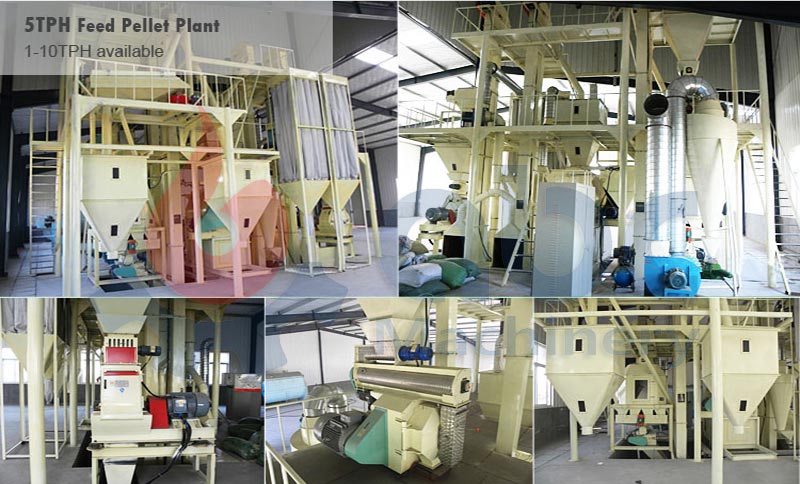
Alfalfa Cattle Feed Pellets: Commercial Production Projects
Alfalfa Pellet Positioning: By Market & Customer Needs
-
Local dairy and beef farms value consistent TMR components and space savings.
-
Smallholders appreciate small-bag options and on-farm pelletizing for convenience.
-
Export: dry, dense pellets reduce transport cost per unit of feed value — but check export regulations and demand.
Quick Reference Checklist for Alfalfa Business
-
Secure consistent alfalfa supply (seasonality planning).
-
Do proximate analysis regularly (protein, fiber, moisture).
-
Offer multiple product grades (e.g., high-protein alfalfa concentrate vs. lower-inclusion forage pellets).
-
Provide technical support and feeding guides to customers (build trust and repeat orders).
Ready to test alfalfa pellets in your ration or start a small-scale pellet line? Talk to equipment suppliers about an alfalfa-capable hammer mill and pellet mill and ask for references on die materials and conditioning systems, they can help size the plant and prototype a formula using your local raw materials. For technical spec sheets and pellet mill options, consult manufacturers experienced with forage pelleting.
 Feed Processing Technology